Search This Blog

Wednesday, February 1, 2012

Obama pushes to speed transition to eTextbooks by 2017

Repost from USA Today

Obama's goal: an e-textbook in every student's hand by 2017.

Federal Communications Commission Chairman Julius Genachowski and Education Secretary Arne Duncan will recommend today at a summit of industry and education officials that states modify the textbook adoption process, allowing K-12 schools to use taxpayer funding once reserved for printed books on iPads, Kindles and the like — as well as software.

They'll begin pushing publishers, computer tablet makers and Internet service providers to work together and lower costs if they want to sell their products to the nation's 50 million schoolkids.

Administration officials say Web-connected instructional materials help students learn more efficiently and give teachers real-time information on how well kids understand material. "We spend $7 billion a year on textbooks, and for many students around the country, they're out of date," Genachowski says. In five years, he predicts, "we could be spending less as a society on textbooks and getting more for it."

While up-front costs for tablet computers are high — new iPads start at $499 — he says moving from paper to digital "saves a ton of money" in the long run. "We absolutely want to push the process."

Matt MacInnis, founder and CEO of the e-textbook company Inkling, says the transition is essential. "There is no future for American education unless we figure this out. There's no segment of any industry anywhere in the world anymore that doesn't rely on technology to get its job done."

Based in San Francisco, Inkling sells college textbooks online and by the chapter, making them available for $2.99 apiece, in most cases, in Apple's iTunes Store.

Robert Pondiscio, spokesman for the Core Knowledge Foundation, a Virginia-based non-profit group that promotes a "coherent, cumulative and content-specific core curriculum," says he's dubious that simply moving materials online or onto e-readers will improve schools, dismissing much of the enthusiasm around educational technology as "magical thinking."

"I wish there was even 10% as much thought as to what is going to come through these devices as in getting them into kids' hands," he says. "It's not a magic bullet. We need to worry about what is on these tablets while they're sitting in kids' laps."

Karen Cator, the U.S. Department of Education's technology director, says moving classwork onto devices such as tablets gives students the ability to do research, check their work and get feedback from teachers, among other uses. "One of the opportunities to extend the school day is by providing students with interactive and engaging environments outside of school," she says.

Tuesday, January 31, 2012

Worthwhile math tasks focusing on the Practices

One of the biggest challenges teachers now face with implementing the CCSS-M is locating worthwhile mathematical tasks.

To the rescue
The Illustrative Mathematics Project has launched a website that will eventually house multiple tasks for EVERY content standards within the CCSS-M. Currently, there are several standards for each grade level that have completed tasks posted. To view the "illustrated" standards, click on the "show only illustrated standards" in the upper right hand corner.
Featured task
One of the newly posted tasks on the Illustrative Math website is a task created by Dan Meyer for 8th grade called Graduation [PDF]. It addresses 8.F.4 with a HEAVY focus on the Practice Standards. 8th grade teachers: start using this task in your classes today!

Monday, January 30, 2012

RtI Webinar for Secondary Mathematics

The Center on Instruction hosted a webinar on January 10, 2012, on RTI in Mathematics at the Secondary Level, featuring Dr. Takako Nomi from the University of Chicago Consortium on School Research and Dr. John Woodward of the School of Education at the University of Puget Sound. Dr. Nomi shared her research on how to help struggling students catch up on foundational skills needed to master algebra, and Dr. Woodward discussed how to motivate middle school students and get them engaged in mathematics. The WebEx archived file is available here and the PowerPoint presentations from the session can be downloaded below.

Tuesday, January 24, 2012

Paid PD opportunity for grades 7-12: Project PRIME

Project PRIME participants have the opportunity to receive free professional development. You must act immediately. The PD dates are set for
  • Thursday, Feb. 9, 2012
  • Monday, Mar. 5, 2012
  • Friday, Mar 23, 2012
  • Monday, Apr. 23, 2012
  • Friday, May 11, 2012
Project PRIME goals: Michigan secondary teachers of mathematics (Grades 7 – 12) will
have
  1. a deeper understanding of mathematics content and pedagogy;
  2. the ability to integrate the appropriate standards of practice in classroom instruction;
  3. the capacity to utilize an Inquiry approach to instruction;
  4. the skill to utilize formative assessment data to guide and differentiate instruction;
  5. an understanding of new content expectations (CCSS); and
  6. the ability to help students develop the quantitative skills needed to be successful in the 21st century.
To accomplish this goal, PRIME will help teachers understand and incorporate into their practice:
  • the Common Core State Standards (CCSS) for Mathematics;
  • the CCSS Eight Standards of Mathematical Practice;
  • the SMARTER Balanced Assessment process and the types of items on the test;
  • the developmental process involved in Mathematical Thinking;
  • the use of “Inquiry” as a means to help students construct their understanding; and the importance of “collaboration” with other professionals to enhance practice.
Think you may be interested? Check out the flyer for more information and to register.
HURRY - spots are limited.


Tuesday, January 17, 2012

PD opportunity: Problem solving and persevering in High School Mathematics

  • Does your department have a shared understanding of the FIRST Standard for Mathematical Practice: problem solving and perseverance?
  • Do you know what to look for and expect from your students when they are engaged in this Practice Standard?
  • Do you know how to support your students in learning to problem solve and persevere in mathematics?

If you answered ‘no’ to any of these questions, register to attend this two-day workshop to explore ways to successfully engage students in MAKING SENSE OF PROBLEMS AND PERSEVERING IN SOLVING THEM.

March 12 and April 16, 2012

The Standards for Mathematical Practice outline the experiences and interactions ALL students should have with mathematics. In these two days, we will explore strategies for problem solving and persevering in depth. After developing a common understanding of what the practice standard LOOKS and SOUNDS like in classrooms, we will explore new resources that have been developed for teachers to assist you in implementing this signpost practice standard.

Each participant will receive 2 books. One relates to problem solving and the other relates to perseverance. We will use the books to explore strategies for supporting students in problem solving and perseverance.

REGISTER NOW. Space is limited to 40.

Tuesday, January 10, 2012

PD opportunity: Problem solving and persevering in K-5 Mathematics

  • Does your department have a shared understanding of the FIRST Standard for Mathematical Practice: problem solving and perseverance?
  • Do you know what to look for and expect from your students when they are engaged in this Practice Standard?
  • Do you know how to support your students in learning to problem solve and persevere in mathematics?

If you answered ‘no’ to any of these questions, register to attend this two-day workshop to explore ways to successfully engage students in MAKING SENSE OF PROBLEMS AND PERSEVERING IN SOLVING THEM.

February 20 and March 27, 2012

The Standards for Mathematical Practice outline the experiences and interactions ALL students should have with mathematics. In these two days, we will explore strategies for problem solving and persevering in depth. After developing a common understanding of what the practice standard LOOKS and SOUNDS like in classrooms, we will explore new resources that have been developed for teachers to assist you in implementing this signpost practice standard.

Each participant will receive 2 books. One relates to problem solving and the other relates to perseverance. We will use the books to explore strategies for supporting students in problem solving and perseverance.

REGISTER NOW. Space is limited.

Monday, January 9, 2012

Developing Effective Fractions Instruction for K-8

The IES practice guide Developing Effective Fractions Instruction for Kindergarten Through 8th Grade provides five research-based recommendations for improving students’ understanding of fractions and rational numbers. Each recommendation includes a summary of the research evidence and a level of evidence rating. This Practice Guide is the foundation for the Doing What Works content on fraction instruction, which merges the five recommendations into four practices
  • Initial fraction concepts
  • Fractions as numbers
  • Operations with fractions
  • Ratio, rate, proportion

Looking for resources to help you implement the five recommendations?
The Doing What Works website for effective fractions instruction has more than you could hope for. Check it out today!

MIT launches FREE online learning initiative

On December 19, 2011, MIT announced the launch of an online learning initiative called “MITx.” MITx will offer a portfolio of MIT courses through an online interactive learning platform that will:
  • organize and present course material to enable students to learn at their own pace
  • feature interactivity, online laboratories and student-to-student communication
  • allow for the individual assessment of any student’s work and allow students who demonstrate their mastery of subjects to earn a certificate of completion awarded by MITx
  • operate on an open-source, scalable software infrastructure in order to make it continuously improving and readily available to other educational institutions.
MITx online learning tools to be freely available
MIT will make the MITx open learning software available free of cost, so that others — whether other universities or different educational institutions, such as K-12 school systems — can leverage the same software for their online education offerings.

“Creating an open learning infrastructure will enable other communities of developers to contribute to it, thereby making it self-sustaining,” said Anant Agarwal, an MIT professor of electrical engineering and computer science and director of MIT’s Computer Science and Artificial Intelligence Laboratory (CSAIL). “An open infrastructure will facilitate research on learning technologies and also enable learning content to be easily portable to other educational platforms that will develop. In this way the infrastructure will improve continuously as it is used and adapted.” Agarwal is leading the development of the open platform.

President Hockfield called this “a transformative initiative for MIT and for online learning worldwide. On our residential campus, the heart of MIT, students and faculty are already integrating on-campus and online learning, but the MITx initiative will greatly accelerate that effort. It will also bring new energy to our longstanding effort to educate millions of able learners across the United States and around the world. And in offering an open-source technological platform to other educational institutions everywhere, we hope that teachers and students the world over will together create learning opportunities that break barriers to education everywhere.”

When will MITx go live?
MIT plans to launch an experimental prototype version of MITx in the spring 2012 timeframe. Once the open learning infrastructure is in stable form, MIT will also release the open-source software infrastructure and will establish ways for other universities, as well as interested individuals, to join MIT in improving and adding features to the technology.

Read the FAQ for more information.

Studying the upcoming election in math class?

Have you noticed the increased focus of Modeling the content standards for Middle School and High School mathematics? Google has provided an excellent resource for many of your Modeling needs.

Days before eight votes separated the first and second place vote-getters in the Iowa caucus, Google announced the launch of an election hub for studying, watching, and generally learning about the U.S. Presidential campaign trail.

Sort through a wealth of election data by popularity, race, and issues. In particular, check out the colorful results maps; and the Trends Dashboard, which builds a timeline of the web's political pulse by comparing candidates' YouTube video views, search traffic, and Google News mentions.


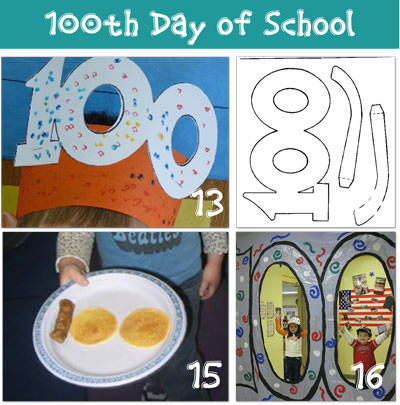
Activities for the 100th day of school

100th Day of School

http://mathforum.org/t2t/faq/faq.100.html

In the coming weeks, many students will be attending school for the 100th day this school year.

The 100th Day can be a lot of fun — and a teachable moment! Counting up to 100 for the 100th day of school gives teachers many special opportunities to investigate place value.

The Math Forum provides discussions and links to online resources that provide many ideas to make your 100th Day a memorable experience for your students.